

Mechanochemistry: solventless solutions for making synthesis processes more sustainable
Evening lecture by Prof. Dr. F.P.T.J. Rutjes, organized by the Groningse Chemische Kring.

Evening lecture by Prof. Dr. F.P.T.J. Rutjes, organized by the Groningse Chemische Kring.
Mechanochemistry
Summary
The fine chemicals and pharmaceutical industries are increasingly seeking sustainable production alternatives to reduce the environmental footprint of traditional, solvent-based chemistry. Mechanochemistry, in which chemical reactions are driven by the application of mechanical force, offers an attractive alternative in this regard. As mechanochemical reactions are typically carried out with little or no solvents, they are inherently associated with a lower environmental impact and a smaller carbon footprint.
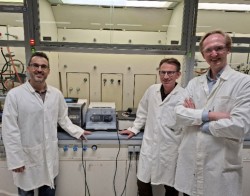 This presentation begins with a general introduction to the history, principles, characteristics and potential of mechanochemistry, including the necessary equipment. Various applications are then discussed, with particular attention paid to the scalability of mechanochemical processes. Both specific chemical transformations and complete synthetic routes are covered. For example, the presentation describes how the complete synthesis of an existing Active Pharmaceutical Ingredient (API) has been successfully ‘translated’ from a conventional solvent-based approach to a mechanochemical process.
In addition to applications in the field of small molecules, recent developments in peptide synthesis are also discussed. Particular attention is paid to the coupling (ligation) of hydrophobic, poorly soluble peptide fragments to form larger peptides or proteins. The classical method, native chemical ligation, is often less suitable for such poorly soluble substrates. The mechanochemical alternative, native mechanochemical ligation, offers a promising alternative in these cases and opens up new possibilities for the synthesis of challenging peptides.
Background of Prof. Dr Floris Rutjes
Full Professor, Head of the Centre of Expertise in Medicinal Chemistry & Chemical Biology, Radboud University (NL)
- Past President of the Royal Netherlands Chemical Society (KNCV) and the European Chemical Society (EuChemS)
- Elected member of the Royal Netherlands Academy of Arts and Sciences (KNAW), the Netherlands Academy of Engineering (NAE) and the Academia Europaea (AE)
- > 350 scientific papers and book chapters; > €3.5 million in ongoing grants
- > 25 patents and co-founder of 5 companies
Education
1993 – 1995 Postdoctoral researcher (with Prof. K.C. Nicolaou), The Scripps Research Institute, La Jolla, CA, USA
1988 – 1993 PhD (under Profs. W.N. Speckamp and H. Hiemstra), University of Amsterdam, NL
1984 – 1988 MSc (cum laude), Department of Organic Chemistry, University of Amsterdam, NL
Current Position
1999 – present Full Professor and Head of the Centre of Expertise MedCHEMbio, Radboud University, NL
Previous positions
2019 – 2025 Director of the Institute for Molecules and Materials, Radboud University, NL
2016 – 2019 Vice-Dean of Education, Faculty of Science, Radboud University, NL
2007 – 2015 Director of the Educational Institute for Molecular Sciences, Radboud University, NL
1999 – 2004 Part-time Professor of Combinatorial Synthesis, University of Amsterdam, NL
1995 – 1999 Assistant Professor, University of Amsterdam, NL
Invitees are very welcome.
Please let us know in advance if you plan to attend.
Send an email to gck@kncv.nl or kommer.brunt@planet.nl.