

Metal-Organic Frameworks – What are they and what can you do with them?
Evening lecture by Em. Prof. Freek Kapteijn organized by the 'Rotterdamsche Chemische Kring'.
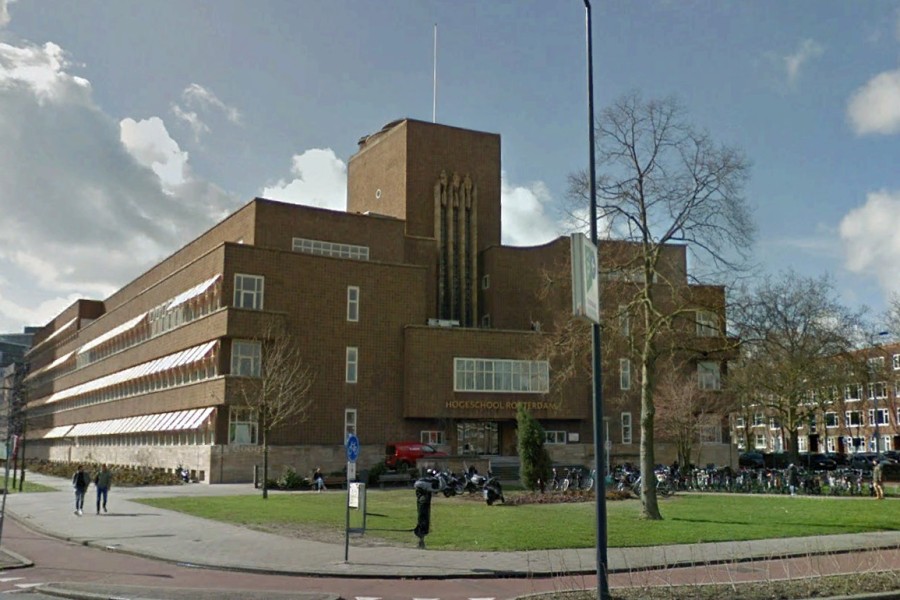
Evening lecture by Em. Prof. Freek Kapteijn organized by the Rotterdamsche Chemische Kring.
Metal-Organic Frameworks – What are they and what can you do with them?
Summary
The 2025 Nobel Prize in Chemistry was recently awarded to three scientists, Susumu Kitagawa, Richard Robson, and Omar M. Yaghi, for their contributions to the development of Metal-Organic Frameworks (MOFs), a new type of molecular architecture.
These laureates developed crystalline structures frequently composed of organic and inorganic building blocks that contain contiguous voids (cavities and pores) through which molecules can move in and out. These materials, of which many thousands have now been synthesized, possess unique properties due to their high porosity (of molecular dimensions), micro- and macroscopic flexibility, and variable host-guest interactions via the incorporated functional groups.
This has led to a plethora of potential applications in areas such as gas and energy storage, gas separation via adsorption and membranes, selective sensors, controlled drug delivery, and multifunctional catalysis.
This lecture will discuss the development of MOFs and related structures, and their special, specific properties that make them so unique. Finally, several examples will be presented of why and how MOFs are used for CO2 capture (Carbon Capture and Storage, CCS), water harvesting from desert air (Adsorptive Water Harvesting, AWH), heat storage, and use in adsorption heat pumps, such as for cooling data centers with waste heat.
Information about the speaker:
Freek Kapteijn is an emeritus professor in Catalysis Engineering at Delft University of Technology. His area of interest is the application of structured materials in multifunctional systems, such as heterogeneous catalysis and separation processes. By thematically optimizing length scales in a catalytic reactor, from the meter to the nanometer scale, the process can be optimized.
Porous crystalline materials such as MOFs and zeolites are a logical choice at the nanoscale and monoliths at the meter scale.
In his work, MOFs have been applied as selective sorbents, multifunctional catalysts, molecular membranes, and even as raw materials for highly active catalysts.
He has co-authored more than 680 scientific publications, supervised by 65 PhD students and numerous master's students and postdocs.
Kapteijn coordinated two European projects in the field of MOFs and organized several international scientific conferences, including the 2nd European Congress on MOFs and Porous Polymers, "EuroMOF2017," in Delft.
In 2017, he was awarded the prestigious Hoogewerff Gold Medal for his R&D work in the field of Catalysis Engineering, as well as the IChemE Andrew Medal.
www.researcherid.com/rid/F-2031-2010
orcid.org/0000-0003-0575-7953
H-index: 122 (Scopus)
# citations: >62000
Highly cited researcher 2018, 2019, 2020, 2022 (WOS)
Invitees are very welcome.
Please send an email to chemischekringrotterdam@gmail.com.