

Unraveling chemical mysteries with new models
Evening lecture by Dr. Pascal Vermeeren, organized by the 'Rotterdamsche Chemische Kring'.
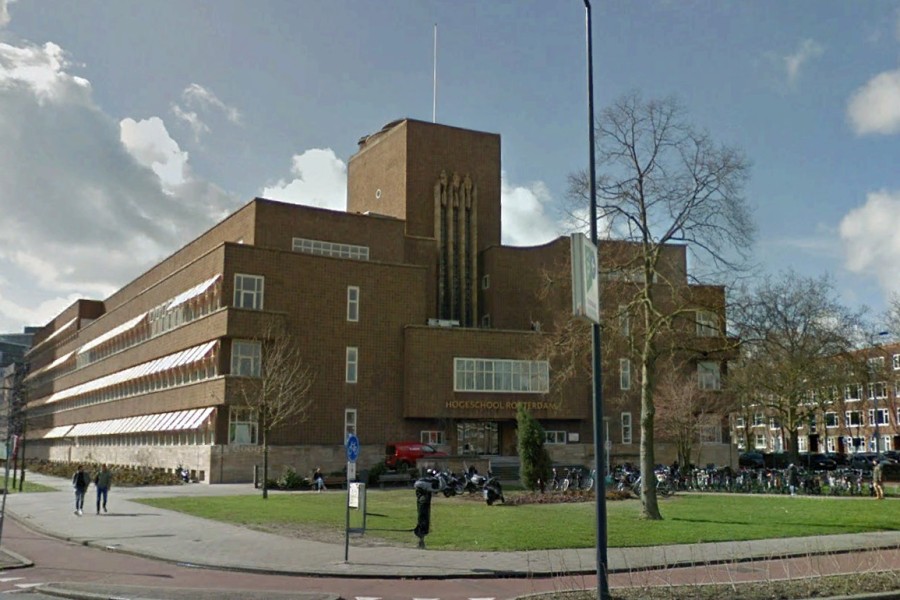
Evening lecture by Dr. Pascal Vermeeren, organized by the 'Rotterdamsche Chemische Kring'.
Avondlezing door dr. Pascal Vermeeren georganiseerd door de Rotterdamsche Chemische Kring.
Unraveling Chemical Mysteries with New Models
Summary
How do chemists unravel the mysteries of atoms and molecules that are completely invisible to the naked eye? In theoretical chemistry, we do this with quantum chemical models that enable us to understand and predict the behavior of molecular systems.
A powerful model not only makes accurate predictions but also separates causes from effects, allowing us to understand why one chemical process is more favorable than another and thus uncover the underlying mechanistic mysteries. These insights are crucial for diverse applications, from the design of new materials and medicines to the optimization of chemical processes in practice.
In this lecture, you will be introduced to the world of quantum chemical calculations using the models we have developed at Vrije Universiteit Amsterdam.
We will begin with the basics of theoretical chemistry and discuss the quantum chemical models we have developed to analyze chemical processes in detail. I will then demonstrate how we apply these models to gain unparalleled insights into various facets of chemistry, using examples of chemical bonding, chemical reactivity, and single-atom catalysis.
I will conclude the lecture with the project "Digital Chemistry: The Chemistry of the Future."
The goal of this project is to make theoretical chemistry accessible to secondary education. This allows students to discover how computers and quantum chemical calculations are becoming increasingly important in understanding the chemical world around us.
About the speaker:
Pascal Vermeeren obtained his PhD in Theoretical Chemistry (cum laude) in 2022 from Vrije Universiteit Amsterdam under the supervision of Prof. F. Matthias Bickelhaupt. For his dissertation, he received the KNCV-CTC PhD Thesis Award for best PhD thesis in Theoretical and Computational Chemistry. In the fall of 2022, Vermeeren was appointed a tenured assistant professor at Vrije Universiteit Amsterdam. His research group focuses on understanding the fundamental principles behind the chemical bonding and reactivity of molecules and surfaces using advanced quantum chemical calculations. Central to his research is the development of powerful and robust chemical models, based on Kohn-Sham (periodic) density functional theory, to analyze these complex processes.
In addition to research, Vermeeren is also actively involved in education at Vrije Universiteit Amsterdam. He obtained his University Teaching Qualification (BKO) and coordinates and lectures courses in physics, quantum chemistry, and computational chemistry within the Bachelor's and (pre-)Master's programs in Chemistry, Pharmaceutical Sciences, and Science, Business, and Innovation. In addition, Vermeeren taught an invited course in Advanced Computational Chemistry at the University of Johannesburg (South Africa) in April 2024 (next edition: March 2026). As chair of the Outreach Committee of the Department of Chemistry and Pharmaceutical Sciences, Vermeeren is committed to raising awareness among prospective students about the central role of chemistry, and theoretical chemistry in particular, in addressing major societal challenges. To achieve this goal, he received an outreach grant (€120,000) for his project "Digital Chemistry: The Chemistry of the Future." This project aims to develop a Digital Chemistry educational program, including digital demonstration experiments for secondary schools, to bring various chemical concepts to life. For more information: https://digitalechemie.nl
Guests are very welcome.
Please send an email to
chemischekringrotterdam@gmail.com.